Welcome to Long loong
Rubber Waterstop for Concrete Joints: A Project-Buyer Selection Guide
For a concrete joint that may move, settle or face a high water head, the waterstop should be selected as part of the joint detail—not added as an afterthought. Importers and project buyers usually need to confirm three things first: which rubber compound fits the service conditions, how the profile will be held in position, and how site joints will be finished.
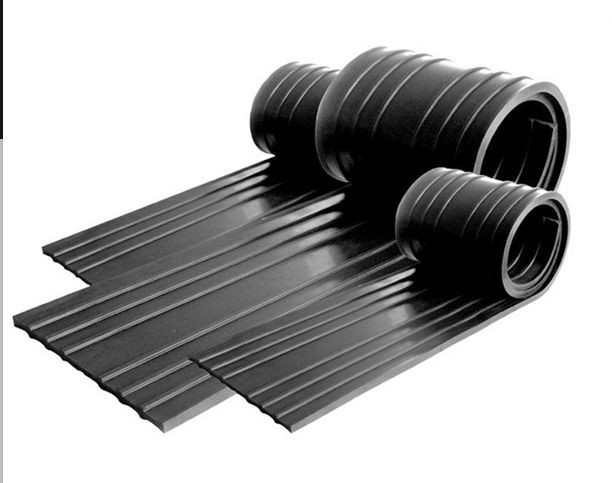
Longloong’s rubber waterstop range is made from SBR, neoprene rubber or natural rubber. The product page describes it as a cast-in concrete waterstop for reservoirs, dams and other water-retaining or water-excluding structures where movement or water pressure matters.
1. Start with the joint, not the catalogue name
A request for “rubber waterstop” is only a starting point. Before asking for a quotation, describe the joint location and the movement you expect. Is it a construction joint, an expansion joint or a junction around a concrete element? Will the joint be exposed to water on one side, or will it need to retain water? A clear joint description helps the supplier recommend the right profile and fixing method.
2. Match the rubber compound to the project conditions
The listed material options are SBR, high-tensile neoprene rubber and natural rubber. The product data uses separate columns for these three compounds, so the buyer should not treat them as interchangeable labels. Ask the supplier to identify the compound on the quotation, packing list and inspection record. This simple step prevents a profile from being approved under one material name and delivered under another.
3. Check movement accommodation and water pressure requirements
The product features highlighted by Longloong include high elasticity, high elongation, movement accommodation and the ability to withstand high hydrostatic head. The same page also notes adjustment for subsidence and seismic movements. These are useful selection points for tunnels, dams, reservoirs and water-treatment structures, but the final profile still needs to match the joint drawing and the project’s design requirements.
4. Confirm the profile and available construction options
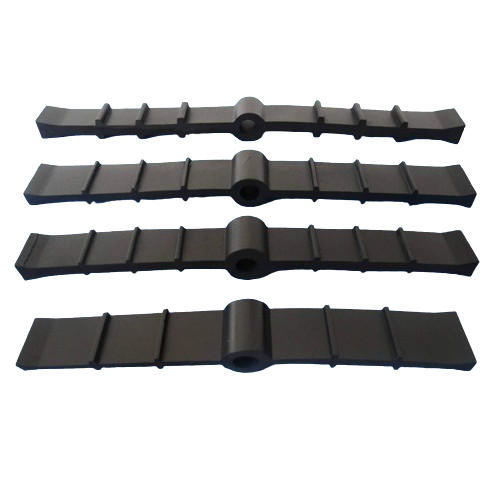
The listed production models include rubber waterstop, HDPE waterstop, TPV waterstop, steel-edge waterstop and reinforced waterstop. The supplier also states that different sizes and custom specifications are available. For a B2B order, send the joint drawing or a marked-up profile sketch with the enquiry. Confirm the width, centre bulb or edge arrangement if applicable, the required length, and whether site joints will be hot vulcanized.
5. Plan fixing before concrete placement
A waterstop can only work as designed if it stays aligned during the pour. The product page’s installation sequence starts with a clean, unobstructed site, followed by measuring and cutting to the required length. It then calls for correct positioning, tight contact with the surrounding area, and suitable adhesive or fixing materials. In practice, the installation team should agree the fixing points before concrete is placed, so the profile is not folded, displaced or covered by reinforcement.
6. Treat joints and ends as inspection points
Rubber waterstop installation includes sealing the joints and ends to reduce the risk of water penetration. The page also identifies hot vulcanized site joints as a product feature. Importers should ask who will make the site joints, which jointing method is specified, and what evidence will be kept after the work. A roll that looks correct on arrival does not prove that the finished joint is watertight.
7. Use the technical table as a release checklist
The published technical data provides reference values for the three listed rubber options. Use the table as a document-checking tool rather than copying isolated numbers into a tender:
| Property | Published test reference | Listed values |
|---|---|---|
| Water absorption | 2 days at 70°C, ASTM D-471 | 5% max. for SBR, neoprene and natural rubber |
| Hardness | Shore A, ASTM D-2240 | 65 for all three listed options |
| Tensile strength | ASTM D-412 | 2,500–3,500 psi min., depending on compound |
| Ultimate elongation | ASTM D-412 | 450% min. for SBR and neoprene; 500% min. for natural rubber |
| Ozone resistance | 7 days at 50 PPHM, 70°C, 20% elongation | No crack for the three listed options |
When reviewing a pre-shipment file, match the material name, profile, production batch and test information to the purchase order. If a project requires a different test method, value or compound, record that requirement before production rather than relying on a generic catalogue sheet.
8. Confirm the application before requesting a quote
Longloong lists water containments, water-excluding structures, tunnels, civil engineering works, water and waste treatment, dams, reservoirs, spillways, chemical areas, irrigation canals, sea walls and culverts among the applications. Share the actual application with the supplier so the quotation can address the joint environment and the required profile instead of offering an unsuitable standard roll.
What to include in a rubber waterstop enquiry
Project type and joint location
Water-retaining or water-excluding duty
Joint drawing, profile sketch or required section
Preferred compound: SBR, neoprene or natural rubber
Required lengths, sizes and any custom details
Site jointing method and fixing arrangement
Inspection documents required before shipment
For product drawings, compound selection and custom profile discussion, see the rubber waterstop product information or contact Longloong with your joint details.